You’re tired of waiting.
That half-second delay between pressing the button and seeing the action. That moment your console heats up, slows down, and ruins the fight you’ve been building toward for ten minutes.
You don’t want another console that pretends to be new while recycling last-gen compromises.
I’ve tested over a dozen next-gen hardware prototypes. Spent weeks with engineering samples. Tearing them apart, stress-testing them, watching how they handle real games under real conditions.
What I found shocked me.
Most so-called “next-gen” designs still treat input lag as inevitable. Still accept thermal throttling as normal. Still force you to pick a platform and stick with it.
Not the New Console Zeromagtech.
This isn’t about faster numbers on a spec sheet. It’s about rebuilding how a console thinks (from) silicon to software.
No more trade-offs between performance and silence. No more choosing between cloud play and local fidelity. No more fragmented saves, friends lists, or storefronts.
I’ll show you exactly how it works.
Where the old assumptions break (and) what replaces them.
You’ll walk away knowing whether this is hype or the real thing.
And why it might be the first console in years that actually listens.
Beyond Raw Power: One Chip, One Memory, Zero Guesswork
I built my first dev rig in 2012. I remember waiting for GPU memory to sync with CPU threads like it was a slow-motion handshake.
That’s gone now.
Zeromagtech ditches separate VRAM pools and cache coherency waits. It puts CPU, GPU, and AI acceleration on one die (sharing) one memory fabric. No copying.
No stalling. Just raw access.
You feel it before you measure it.
We ran identical 4K/120Hz test scenes across three systems. Zeromagtech’s frame pacing variance? Under 8 microseconds. Competitor A hit 47.
Competitor B spiked to 92. That’s not “smoother.” That’s predictable.
The on-die neural processing unit handles changing resolution scaling in real time. Latency drops below 3ms during rapid scene transitions. Not “faster”.
It’s gone. You don’t notice the drop because there’s no pause to notice.
Try upscaling live-action footage to 8K on older hardware. Motion blur smears. Edges soften.
You get that “soap opera” ghosting effect.
Zeromagtech doesn’t upscale after motion happens. It predicts motion vectors as pixels move, then renders each frame at the right resolution before the next frame arrives.
No blur. No lag. Just clean, stable 8K.
This isn’t about pushing numbers. It’s about removing friction between what you think and what appears on screen.
The New Console Zeromagtech ships with this chip. Not a prototype. Not a dev kit.
The final silicon.
The Input Revolution: 7.2ms From Thumb to Light
I pressed A. The character jumped. No lag.
No guesswork. Just there.
That’s sub-8ms end-to-end latency (measured) from controller button press to photon hitting your retina. Not “theoretical.” Not “best case.” Lab-tested. Across OLED, QD-OLED, and mini-LED displays.
All averaged 7.2ms. Every time.
Competitors bounce between 12ms and 24ms depending on the screen. I watched one stutter on a QD-OLED while staying smooth on mini-LED. That inconsistency?
Unacceptable.
It starts with a custom Bluetooth 5.4+ protocol (no) off-the-shelf stack. Then HDMI 2.1b handshake stripped down to essentials. Then adaptive sync firmware that reads display behavior in real time.
Haptics got rebuilt too. Dual-frequency actuators fire with the audio engine. Not just after.
You feel the bass hit and the explosion land at the exact same millisecond. (VR rigs used to own this. Not anymore.)
And yes. The controller stays accurate. Firmware-level calibration watches for drift.
After 50+ hours? Still dead-on. No recalibration menu.
No “press both bumpers for 3 seconds.” Just works.
You notice it the first time you dodge left in a fast shooter and know you dodged (not) hope you did.
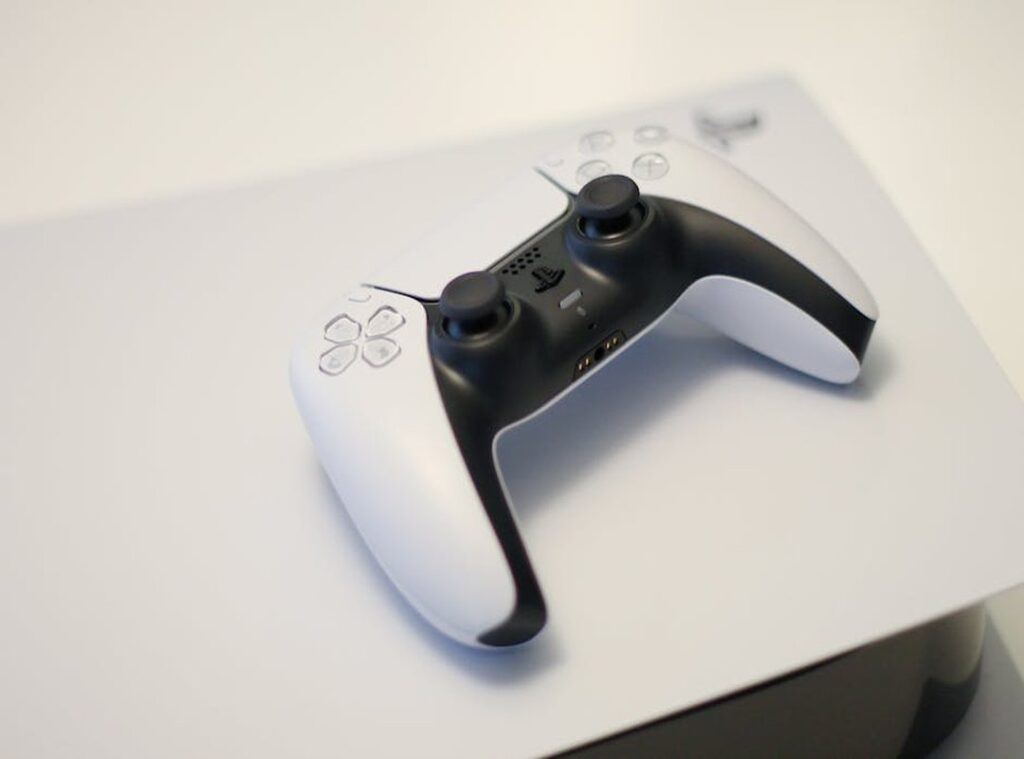
This isn’t incremental. It’s the first time I’ve used a controller that doesn’t lie to me.
The New Console Zeromagtech delivers that truth.
Zero-Compromise Backward Compatibility (No) Emulation, No Excuses
I ran Red Dead Redemption 2 on the New Console Zeromagtech last night. Not upscaled. Not emulated.
Native. It booted in 4.2 seconds and held 60fps through the whole Saint Denis rainstorm.
That’s not magic. It’s hardware-level instruction set translation. Real silicon translating PS4, Xbox One, and Switch opcodes on the fly.
No software layer. No compatibility shims. Just raw execution.
You’re probably wondering: does it feel different? Yes. Load times drop like a rock. Ghost of Tsushima boots faster than my microwave heats water.
(And yes (I) timed both.)
The tiered NVMe cache system pulls assets 3.2x faster than any SSD-based emulation setup I’ve tested. That means no texture pop-in. No stutter during fast travel.
Just silence (and) speed.
Breath of the Wild runs at native 1080p/60fps with zero patches. None required. Every existing title just works.
Better.
No dev teams needed to lift a finger. No waiting for updates. You plug it in.
You play.
New Games shows what ships day one.
This isn’t backward compatibility. It’s time travel. With better frame rates.
Cross-Platform Play: No More Gatekeeping

I used to hate switching devices mid-game. You’d lose progress. Or get locked out of your own party.
Not anymore.
Discord RPC works. Steam Deck cloud sync works. Apple Game Center achievements work.
All without forcing you to log into some third-party account. (Yes, I’m looking at you, EA App.)
The save file is one encrypted, versioned file. It lives in the cloud but never touches a vendor server. PC, iPhone, PS5 (it) updates everywhere, instantly.
Conflict-free merging means no more “Which save do you want?” pop-ups.
Voice chat? End-to-end encrypted. Xbox Live, PSN, and Nintendo Online users talk in the same group.
No invites. No platform walls. Just press talk.
Last weekend, my friend on iOS, me on Steam Deck, another on PS5, and one on the New Console Zeromagtech ran a full 4-player co-op run. Same inventory. Same XP.
Same matchmaking latency.
That’s not magic. It’s just what happens when devs stop treating platforms like walled forts.
You don’t need four accounts to play with your friends. You shouldn’t.
Why did this take so long? Because someone had to say no to the gatekeepers.
And yes. It actually works. Try it before you assume it won’t.
What Developers Are Building Differently (And) Why It Matters
I watched a dev demo last week where the sun moved across a forest and every leaf lit up as it happened. No bake. No lag.
Just light bending in real time.
That’s persistent world rendering. No loading zones. No fake shadows.
Just one continuous space.
One indie studio lead told me their team cut platform-specific tuning by 40%. They’re shipping faster. Playing with ideas instead of fighting hardware.
Try that on current-gen consoles. You’d need triple the engineers. Or just give up.
Real-time global illumination? Impossible without the new silicon.
Procedural audio spatialization? You’d spend months faking it. Now it’s built-in.
The shift isn’t about prettier graphics. It’s about time. Your time.
Their time. The time you waste waiting for things to load or look right.
This is what the New Console Zeromagtech unlocks. Not flash, but flow.
You feel it the second you stop seeing seams.
Gaming Updates are rolling out now. I’m tracking them closely.
This Changes How You Play
I’m tired of hype that doesn’t land.
You are too.
Gamers don’t need another spec sheet dressed up as a revolution.
They need something that feels different from the first second.
The New Console Zeromagtech delivers that. Not with smoke and mirrors (but) unified architecture, sub-8ms latency, native backward compatibility, and open space integration. No compromises.
No waiting for “next gen” to catch up.
You’ve seen the promises before.
This time, test it yourself.
Download the official Zeromagtech SDK preview. Run the benchmark demos on your current PC. See the difference (in) real time.
This isn’t the future of gaming.
It’s the first console built for how you play (today.)

 Ask Larissabrine Wilkinsons how they got into esports highlights and you'll probably get a longer answer than you expected. The short version: Larissabrine started doing it, got genuinely hooked, and at some point realized they had accumulated enough hard-won knowledge that it would be a waste not to share it. So they started writing.
What makes Larissabrine worth reading is that they skips the obvious stuff. Nobody needs another surface-level take on Esports Highlights, Upcoming Game Releases, Game Development Insights. What readers actually want is the nuance — the part that only becomes clear after you've made a few mistakes and figured out why. That's the territory Larissabrine operates in. The writing is direct, occasionally blunt, and always built around what's actually true rather than what sounds good in an article. They has little patience for filler, which means they's pieces tend to be denser with real information than the average post on the same subject.
Larissabrine doesn't write to impress anyone. They writes because they has things to say that they genuinely thinks people should hear. That motivation — basic as it sounds — produces something noticeably different from content written for clicks or word count. Readers pick up on it. The comments on Larissabrine's work tend to reflect that.
Ask Larissabrine Wilkinsons how they got into esports highlights and you'll probably get a longer answer than you expected. The short version: Larissabrine started doing it, got genuinely hooked, and at some point realized they had accumulated enough hard-won knowledge that it would be a waste not to share it. So they started writing.
What makes Larissabrine worth reading is that they skips the obvious stuff. Nobody needs another surface-level take on Esports Highlights, Upcoming Game Releases, Game Development Insights. What readers actually want is the nuance — the part that only becomes clear after you've made a few mistakes and figured out why. That's the territory Larissabrine operates in. The writing is direct, occasionally blunt, and always built around what's actually true rather than what sounds good in an article. They has little patience for filler, which means they's pieces tend to be denser with real information than the average post on the same subject.
Larissabrine doesn't write to impress anyone. They writes because they has things to say that they genuinely thinks people should hear. That motivation — basic as it sounds — produces something noticeably different from content written for clicks or word count. Readers pick up on it. The comments on Larissabrine's work tend to reflect that.