
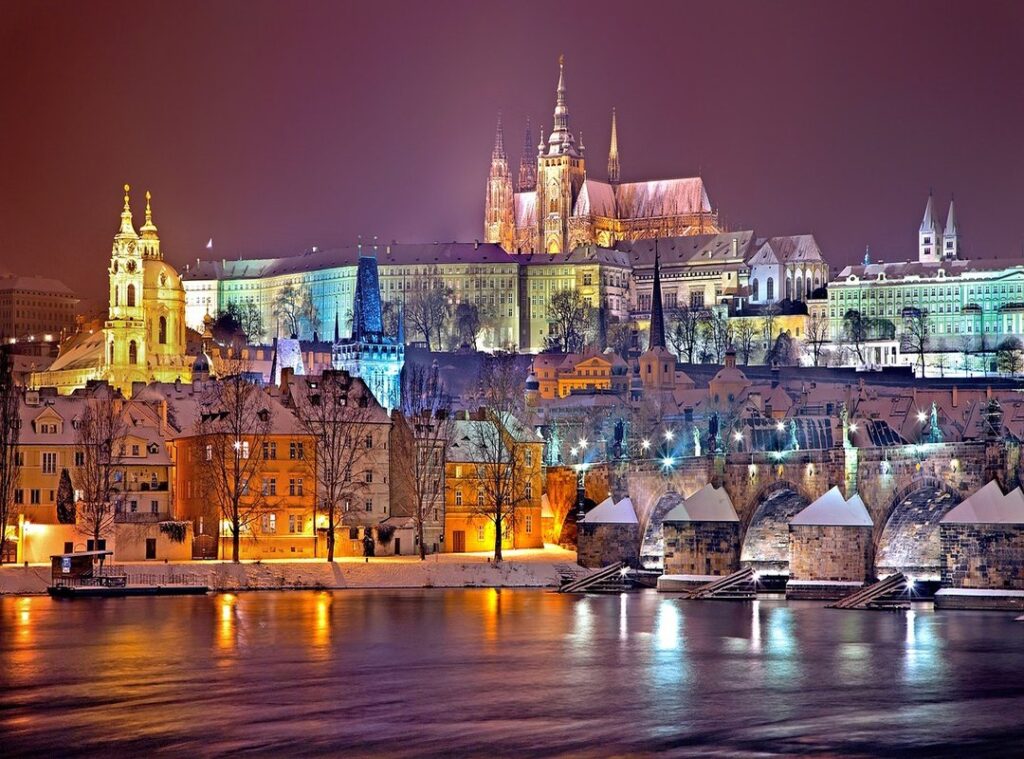
Guess what? If I asked you to name the longest capital city in europe, would Bratislava, Slovakia, come to mind? Probably not.
But that’s the answer. Its unusual shape isn’t just a quirk—it’s a result of unique geography and history.
I’m going to dive into why this city is so uniquely long, how it got its shape, and what it’s like to travel from one end to the other. When we say “longest,” we mean the greatest distance between its official city limits in a relatively straight line.
Bratislava, Slovakia: Measuring Europe’s Longest Capital
Bratislava, the capital of Slovakia, stretches about 17 kilometers (about 10.5 miles) from its westernmost point near the Austrian border to its easternmost point. This measurement runs parallel to the Danube River.
To put that in perspective, imagine the length of Manhattan Island or the distance of a half-marathon. It’s quite a stretch.
But here’s the kicker: Bratislava is not just long; it’s also narrow. This makes it stand out from other major European capitals like Paris, London, or Berlin, which tend to have more circular or sprawling layouts.
So, why does this matter? Understanding the city’s shape can help you plan your visit or even your daily commute if you live there. For instance, knowing that the city is long and narrow can help you choose the best routes for getting around.
Pro tip: If you’re visiting, consider using the river as a natural guide. It can help you orient yourself and make your way through the city more easily.
It’s important to note that being the longest capital city in europe doesn’t mean it’s the largest by area or population. That title goes to Moscow. But Bratislava’s unique shape and layout make it a fascinating place to explore.
A simple map graphic would be really helpful here. It could show the city’s borders with Austria and Hungary, and how it stretches along the Danube. This visual aid would give you a clear idea of the city’s layout and its geographical context.
Shaped by a River and Mountains: Why Bratislava is So Narrow
Have you ever wondered why some cities stretch out for miles, while others stay compact? Bratislava, the capital of Slovakia, is one such city. It’s shaped by two powerful geographical features.
To the south, the Danube River forms a natural boundary. This river, with its strong currents and frequent flooding, has always prevented urban sprawl in that direction.
Just to the north and east, the Little Carpathian mountains rise up. These mountains create another natural barrier, limiting where the city can expand.
Together, the river and the mountains essentially funneled the city’s growth along an east-west axis. Imagine the city as a long, narrow strip, rather than a sprawling metropolis.
Bratislava’s position as a border city also played a role. It’s the only capital bordering two independent countries, Austria and Hungary. This unique layout means many of the city’s districts are arranged like beads on a string along the river.
Interestingly, this linear development makes Bratislava one of the longest capital city in europe. It stretches out, following the natural contours of the land.
So, next time you visit Bratislava, take a moment to appreciate how the river and mountains have shaped this unique city. longest capital city in europe
A Journey from End to End: Exploring Bratislava’s Length
Let’s embark on a virtual tour of Bratislava, the LONGEST CAPITAL CITY IN EUROPE. (Yes, I know, it’s not the longest, but let’s pretend for a moment, okay?)
We start at the western end, in the borough of Devín. Here, you’ll find the historic Devín Castle, perched at the confluence of the Danube and Morava rivers. It’s like a medieval fortress guarding the city’s entrance.
Moving eastward, we hit the heart of the city. The Bratislava Castle looms over the skyline, offering panoramic views. Don’t miss the charming Old Town (Staré Mesto) with its cobblestone streets and quaint cafes.
And, of course, there’s the iconic UFO Bridge, which looks like something straight out of a sci-fi movie.
Next up, we pass through the more modern residential and industrial districts. Ružinov and Petržalka are bustling with life. Petržalka, in particular, is one of Central Europe’s largest housing complexes.
Imagine rows upon rows of apartment buildings, each one telling a story of the city’s rapid growth.
As we approach the easternmost edge, we reach boroughs like Vrakuňa. Here, the urban center gives way to the suburbs. You can see the transition from the hustle and bustle to a more laid-back, suburban vibe.
Throughout this journey, public transportation plays a crucial role. Trams and buses crisscross the city, connecting these distant parts. Without them, getting around would be a real challenge.
(Imagine trying to walk from Devín to Vrakuňa—ouch!)
So, there you have it, and a quick, lighthearted tour of Bratislava’s length. From the historic west to the modern east, this city has a lot to offer.
How Do Other European Capitals Compare?
When it comes to the longest capital city in Europe, there are a few common misconceptions. Reykjavik, for example, is often mentioned because of its stretched-out coastal development. But by official city limits, it’s not as long as Bratislava.
Many sprawling cities like London or Moscow are massive in total area. However, they don’t have the same extreme length-to-width ratio. These capitals typically grew outwards in a radial pattern from a central core.
This is a more common development style than Bratislava’s linear one.
The key to why Bratislava holds this unique title is the specific definition of ‘longest’—a continuous stretch between city limits. That’s what sets it apart.
More Than Just a Trivia Answer
Bratislava’s status as longest capital city in europe is a direct result of its geography, caught between a major river and a mountain range. This unique shape has defined its history, culture, and urban planning.
Consider the geography of cities to better understand their character.

 Harold Ashertine has opinions about player tips and strategies. Informed ones, backed by real experience — but opinions nonetheless, and they doesn't try to disguise them as neutral observation. They thinks a lot of what gets written about Player Tips and Strategies, Esports Highlights, Latest Gaming News is either too cautious to be useful or too confident to be credible, and they's work tends to sit deliberately in the space between those two failure modes.
Reading Harold's pieces, you get the sense of someone who has thought about this stuff seriously and arrived at actual conclusions — not just collected a range of perspectives and declined to pick one. That can be uncomfortable when they lands on something you disagree with. It's also why the writing is worth engaging with. Harold isn't interested in telling people what they want to hear. They is interested in telling them what they actually thinks, with enough reasoning behind it that you can push back if you want to. That kind of intellectual honesty is rarer than it should be.
What Harold is best at is the moment when a familiar topic reveals something unexpected — when the conventional wisdom turns out to be slightly off, or when a small shift in framing changes everything. They finds those moments consistently, which is why they's work tends to generate real discussion rather than just passive agreement.
Harold Ashertine has opinions about player tips and strategies. Informed ones, backed by real experience — but opinions nonetheless, and they doesn't try to disguise them as neutral observation. They thinks a lot of what gets written about Player Tips and Strategies, Esports Highlights, Latest Gaming News is either too cautious to be useful or too confident to be credible, and they's work tends to sit deliberately in the space between those two failure modes.
Reading Harold's pieces, you get the sense of someone who has thought about this stuff seriously and arrived at actual conclusions — not just collected a range of perspectives and declined to pick one. That can be uncomfortable when they lands on something you disagree with. It's also why the writing is worth engaging with. Harold isn't interested in telling people what they want to hear. They is interested in telling them what they actually thinks, with enough reasoning behind it that you can push back if you want to. That kind of intellectual honesty is rarer than it should be.
What Harold is best at is the moment when a familiar topic reveals something unexpected — when the conventional wisdom turns out to be slightly off, or when a small shift in framing changes everything. They finds those moments consistently, which is why they's work tends to generate real discussion rather than just passive agreement.