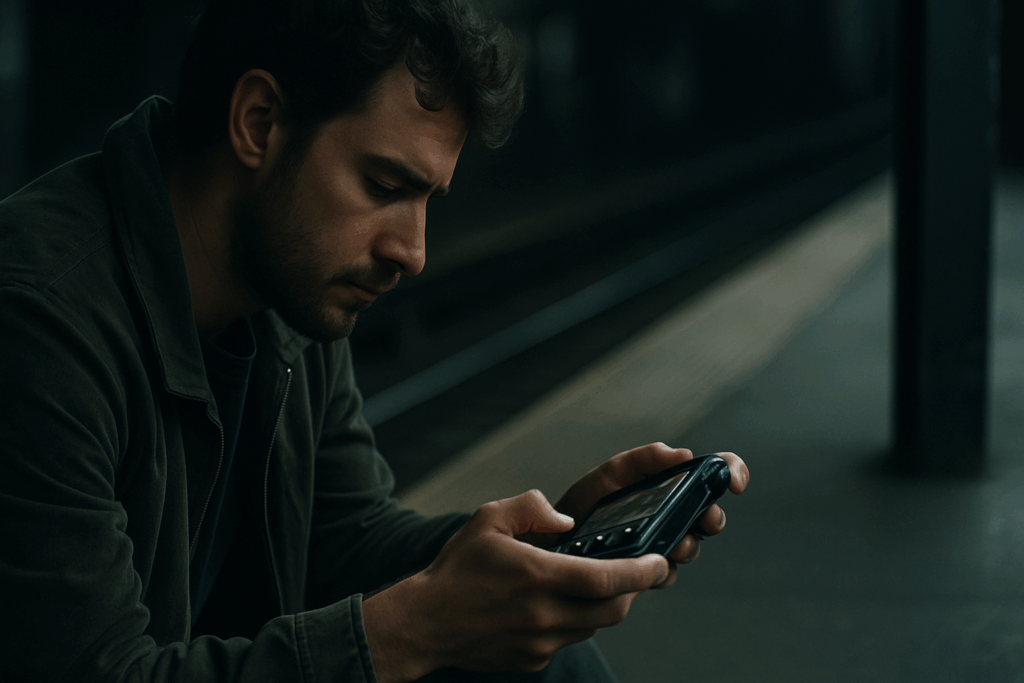

You’ve seen it. That arena packed with 60,000 people screaming for a League of Legends final. The lights.
The stage. The tension in every twitch of a pro’s hand.
Then your uncle leans over and says, “But is it really a sport?”
I hear that question every week. From teachers. From coaches.
From parents who still think gaming means slouching on a couch eating chips.
It’s exhausting.
Especially when you know what goes into training (the) 12-hour days, the heart rate spikes during clutch moments, the contract negotiations, the physical therapy for carpal tunnel and neck strain.
This isn’t fantasy. It’s real. It’s documented.
I’ve sat in practice rooms with top-tier players. Reviewed their biometric data. Read their contracts.
Watched them rehab like Olympic sprinters.
Why Gaming Should Be a Sport Befitgametek isn’t about hype or wishful thinking. It’s about facts. About fairness.
About stopping the double standard.
You want proof. Not passion.
You want respect (not) applause.
Here’s what you’ll get: clear evidence, zero fluff, and no defensiveness.
Just the case laid bare.
The Case for Recognizing Gaming as a Competitive Sport starts now.
Gaming Meets Every Sport Criterion. Let’s Settle This
I’ve watched pro League of Legends players train 10 hours a day. Same as Olympic swimmers. Same fatigue.
Same cortisol spikes.
Organized competition? Yes. Skill-based performance?
Absolutely. Top players hit 400+ APM with zero lag. That’s not clicking.
It’s fine motor control under duress.
Physical exertion? Don’t laugh. EEG and HRV data show elite gamers’ heart rates spike to 160 bpm during finals.
Their hands sweat. Their focus narrows like a sprinter at the block.
Rules-based structure? Every tournament runs on strict, codified rule sets. From patch restrictions to anti-cheat enforcement.
One misstep and you’re disqualified.
Institutional recognition? The IOC added esports to its Olympic initiatives. The NCAA now funds varsity esports programs.
Germany and South Korea issue athlete visas to pros.
The 2023 Esports Research Institute report found top players peak between ages 21–25. Same window as gymnasts or sprinters. Career longevity?
Shorter than baseball, longer than figure skating.
You still think “sport” means only things with grass and cleats?
That’s why I built Befitgametek (to) treat gaming training like real athletic prep.
Why Gaming Should Be a Sport Befitgametek isn’t a question anymore. It’s a fact with data behind it.
And if your coach still rolls their eyes? Hand them the HRV charts.
Then walk away.
The Rigor Behind the Screen
I wake up at 5:30 a.m. No alarm. My body knows.
Warm-up drills first (aim) trainers, reaction timers, muscle memory resets. Then VOD review: not just what happened, but why that rotation failed. Team scrims run 10 a.m. to 2 p.m.
Lunch is protein and silence.
Mental conditioning starts at 3 p.m. Breathing work. Focus sprints.
Cortisol tracking. I stop at 4:30 p.m. (not) because I’m done, but because my prefrontal cortex starts lying to me.
That’s ten hours. Every day. For months.
Not weeks.
Real-time adaptation isn’t hype. It’s your working memory firing at 120 bpm while your heart rate hits 165. Same as a fencer mid-bout.
Your brain doesn’t get a timeout.
A 2022 Frontiers in Psychology study found elite CS2 players show neural fatigue markers identical to air traffic controllers after shift. Carpal tunnel? Vision strain?
Burnout? All documented. Not theoretical.
| Metric | Pro CS2 Player | Pro Basketball Player | Olympic Fencer |
|---|---|---|---|
| Weekly training (hrs) | 60. 75 | 35. 45 | 25. 35 |
| Avg. HR during match | 160. 175 | 155 (165) | 165 (170) |
| Cognitive load (fNIRS) | High | Moderate | High |
This isn’t “just gaming.”
It’s mental endurance (measured,) repeatable, exhausting.
You think chess grandmasters train less? Try holding six map positions, three enemy ultimates, and your team’s cooldowns in working memory for 47 minutes straight.
Why Gaming Should Be a Sport Befitgametek
It already is. You’re just not looking at the data.
From Basement LANs to Stadium Lights

I ran my first tournament in a friend’s garage. Twelve chairs. One projector.
A $200 prize pool split three ways.
That was 2012.
Now I’ve stood in Seoul’s Gocheok Sky Dome watching 20,000 people scream over a single clutch play. The sound hits your chest before your ears catch up. (Yes, it’s real.)
The LEC has salary floors. Health insurance. Contracts reviewed by player reps.
Overwatch League had all that (until) it didn’t. But the standard stuck. Players unionized.
They demanded better. And they got it.
Broadcast reach? ESL One Berlin outdrew the NBA Finals in 18 (34) males in Germany last year. Not close. Outdrew.
Prize pools aren’t just hype. The International 2023 started at $3.3M (before) crowdfunding pushed it past $35M. That’s not “fun money.” That’s rent, student loans, retirement accounts.
I wrote more about this in Befitgametek Gaming Tech.
Sponsorships, media rights, merch (none) of it works without infrastructure. Without integrity rules. Without anti-doping enforcement.
Without WESA stepping in.
Which brings me to Why Gaming Should Be a Sport Befitgametek.
It already is. Just unevenly recognized.
You don’t need a jersey or a whistle to prove legitimacy. You need contracts that protect people. Venues that scale.
And tech that keeps up. That’s why tools like Befitgametek Gaming Tech by Befitnatic matter. They’re built for this level of demand.
Not hobbyist setups. Not “good enough.”
I’ve seen too many leagues fold because their backend couldn’t handle 5,000 concurrent viewers. Or their comms failed mid-final. Don’t be that league.
Bridging the Perception Gap: Let’s Get Real
It’s just playing video games? No. That’s like calling Wimbledon “just hitting a ball.”
Recreational play and elite competition are different animals. Amateur tennis players hit forehands for fun. Pros train 6 hours a day, track reaction latency, and rehab shoulder tendons.
Same with top-tier gamers.
They’re not just clicking. StarCraft II pros hit 300+ APM (actions) per minute. That’s faster than most surgeons type.
Or most lawyers draft emails.
And yes, they get hurt. Carpal tunnel. Tendonitis.
Vision strain. There’s peer-reviewed data on this (see Journal of Sports Sciences, 2022). Not speculation.
Not hype.
“It’s not traditional”? Skateboarding was “just kids on plywood” until Tokyo 2020. Surfing was “too loose” until Paris 2024.
Tradition isn’t static. It’s negotiated.
I’m not ignoring real concerns. Screen time matters. Accessibility is broken in too many arenas.
But top orgs now run physical therapy programs, ergonomic audits, and adaptive controller labs.
That’s why I say: Why Gaming Should Be a Sport Befitgametek. Not because it’s easy. Because it demands discipline, precision, and resilience.
If you’re building that discipline, start with gear that won’t hold you back.
Check out which gaming keyboard is best for serious practice. Which Gaming Keyboard.
Respect Isn’t Granted. It’s Won
I’ve seen the bias. I’ve heard the dismissals. Skilled athletes get written off because they hold controllers instead of bats or balls.
That’s the real pain point. Not debate. Not semantics. Why Gaming Should Be a Sport Befitgametek is about fairness (plain) and simple.
We named three things that can’t be ignored: clear definitions, real rigor, and leagues built like pro sports (not) startups.
You already know this. You’ve watched the replays. You’ve checked the training logs.
You’ve seen the contracts.
So do this now: pick one verified fact from this article. Text it to someone who doubts gaming’s legitimacy. Then send them straight to an official league’s athlete profile page.
See how fast their skepticism cracks.
Respect isn’t granted by tradition (it’s) earned by excellence, and that’s already happening, frame by frame.

 Ask Larissabrine Wilkinsons how they got into esports highlights and you'll probably get a longer answer than you expected. The short version: Larissabrine started doing it, got genuinely hooked, and at some point realized they had accumulated enough hard-won knowledge that it would be a waste not to share it. So they started writing.
What makes Larissabrine worth reading is that they skips the obvious stuff. Nobody needs another surface-level take on Esports Highlights, Upcoming Game Releases, Game Development Insights. What readers actually want is the nuance — the part that only becomes clear after you've made a few mistakes and figured out why. That's the territory Larissabrine operates in. The writing is direct, occasionally blunt, and always built around what's actually true rather than what sounds good in an article. They has little patience for filler, which means they's pieces tend to be denser with real information than the average post on the same subject.
Larissabrine doesn't write to impress anyone. They writes because they has things to say that they genuinely thinks people should hear. That motivation — basic as it sounds — produces something noticeably different from content written for clicks or word count. Readers pick up on it. The comments on Larissabrine's work tend to reflect that.
Ask Larissabrine Wilkinsons how they got into esports highlights and you'll probably get a longer answer than you expected. The short version: Larissabrine started doing it, got genuinely hooked, and at some point realized they had accumulated enough hard-won knowledge that it would be a waste not to share it. So they started writing.
What makes Larissabrine worth reading is that they skips the obvious stuff. Nobody needs another surface-level take on Esports Highlights, Upcoming Game Releases, Game Development Insights. What readers actually want is the nuance — the part that only becomes clear after you've made a few mistakes and figured out why. That's the territory Larissabrine operates in. The writing is direct, occasionally blunt, and always built around what's actually true rather than what sounds good in an article. They has little patience for filler, which means they's pieces tend to be denser with real information than the average post on the same subject.
Larissabrine doesn't write to impress anyone. They writes because they has things to say that they genuinely thinks people should hear. That motivation — basic as it sounds — produces something noticeably different from content written for clicks or word count. Readers pick up on it. The comments on Larissabrine's work tend to reflect that.